
There is a new type of digital camera on the market, and informally they have become known as EVIL cameras.
From the name, it would seem there is something very sinister about these cameras, as if they could actually steal souls or vaporize subjects.
In actuality, there is nothing nefarious about EVIL cameras. The term is simply an acronym similar to SLR (Single Lens Reflex). EVIL stands for Electronic Viewfinder, Interchangeable Lens.
Depending on your point of view, the term is either an unfortunate nickname or a clever play on words. Regardless, EVIL cameras are set to make a big splash in the coming years.
The EVIL models are designed to occupy the market between the small, inexpensive point and shoot cameras and top-line dSLRs. Again depending on your orientation, they are either a waste of time or the type of cameras the photo industry should have built long ago.
The new Sony Nex-5 and Nex-3 are prime examples of EVIL cameras. The Micro Four Thirds cameras, offered by Olympus and Panasonic are also considered to be EVIL cameras. Samsung also offers an entry in this field.
EVIL Camera Pros
Size and Weight
Although they are too large to fit in the average pocket, EVIL cameras are much smaller than the typical dSLR. They are also lighter to carry, something many photographers would appreciate after a long day of schlepping camera gear around.
DSLR Sensor size
Not all of the EVIL cameras have big sensors, but several of the new models use the same size and type of sensor as a typical dSLR. Larger sensors equate to less noise and better image quality. The result is a camera the size of a large point and shoot which offers the image quality of a dSLR.
Interchangeable Lenses
While these new mid-range cameras look similar to their point and shoot brethren, the fact that they can accept a full range of lenses provides options and flexibility the smaller fixed-lens cameras cannot match.
Advanced Features
Some camera makers are positioning these new models as a replacement for low-end dSLRs. To assume this role EVIL cameras require dSLR features such as RAW image creation, manual exposure options, burst mode, high-ISO settings and the like.
EVIL cameras do not look like a professional camera
Appearance wise, EVIL cameras look like a big point and shoot. Many people are nervous around photographers with pro-level cameras. Sports and concert venues often discourage dSLRs, because they assume this could lead to unauthorized photo sales. The person with an EVIL camera will look like an ordinary fan or tourist, allowing them to gather photos unobtrusively.
This works both ways, however. Someone with a dSLR will appear more professional and may garner more prestige and paying assignments if they want to sell their work.
EVIL Camera Drawbacks
No eve-level viewfinder
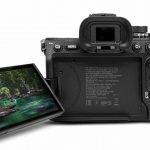
Probably the biggest limitation of the basic EVIL design is the lack of an eye-level viewfinder. To compose and shoot you must use the LCD on the back of the camera. While this might work with simple point and shoot cameras, there are some severe limitations when using long telephoto lenses. Imagine affixing a twelve-inch-long 300mm lens on one of these cameras. To shoot hand-held, you would have to hold the camera body at arm’s length, with that huge, heavy lens protruding out the front. Good luck holding that steady.
Another disadvantage is that many LCD panels are difficult to see in bright sunlight. Composing and focusing in full sun might be difficult.
Fortunately, some of the EVIL camera manufacturers are offering auxiliary clip-on eye-level electronic viewfinders. These allow you to hold an EVIL camera up to your eye, much like a conventional dSLR. This is a step in the right direction, although many photographers will still prefer the look of an optical viewfinder over an electronic one.
Lack of certain dSLR features
While EVIL cameras vary by manufacturers, the feature list usually falls short of a dSLR. Naturally, camera makers will add features if they sense consumer demand. At the same time, manufacturers do not want to cannibalize their dSLR line, so they may be loath to make their EVIL models as capable as a dSLR. The new camera’s smaller form factor also may limit the feature set.
Lens/Accessories not as extensive as dSLR systems
Most dSLR lines are fairly mature, with a complete system of lenses, flash units and accessories. EVIL camera designs are new, and their systems are smaller and less complete. Over time, successful EVIL systems will mature and expand. If you choose a model that fails to gain traction in the marketplace, however, you may find yourself limited and frustrated by the lack of available attachments.
Interchangeability between EVIL and dSLR models is limited
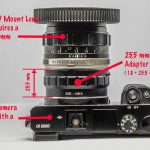
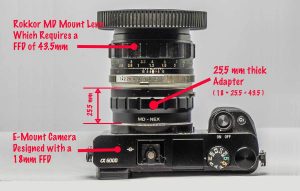
Some EVIL cameras can use SLR lenses and flash units, making them attractive as a second body or as a backup to an existing dSLR system. Because the EVIL bodies are so small, the sensor is too close to the lens mount to allow dSLR lenses to attach directly. An adapter may allow you to use your SLR lenses, but adapters generally involve some form of compromise.
Prices are not much different than an actual dSLR
As dSLR prices continue to fall, there isn’t much difference between the cost of a dLSR and an EVIL camera. In fact, when you add items like an accessory electronic viewfinder, the EVIL camera may cost significantly more. The new designs are smaller and lighter, but the dSLR has more features. There are many reasons to prefer one type over the other, but price is not one of them.
EVIL accessories may not transfer if you want to upgrade to a dSLR
A point and shoot camera is generally complete by itself, so if a photographer wants to advance to a high-quality dSLR, there are no legacy equipment to lock them into a specific system. If someone assembles a nice EVIL system, with several lenses and accessories, they will have to start all over again if they want to move to a dSLR. This may end up trapping some photographers into the EVIL system because they have too much invested. Upgrading to dSLR equipment may be too costly.
At the end of the day, EVIL cameras aren’t bad, they are just different. Whether you should own one depends on your photographic aspirations, your photography requirements and your philosophy. They won’t replace a dSLR or a point and shoot in every situation, but an EVIL camera could be a “good” option for you.

I was shown a Panasonic Lumix and the saleman touted it as a hybrid still digital and a videocam. What are your comments on that? Thanks